

orlando built the perfect system to prove paolo banchero doesn't work
four seasons, four negative on-off ratings, and one backup guard doing in eight games what the magic spent four years waiting for their franchise player to deliver.
paolo banchero is now a member of the most exclusive and miserable club in modern basketball. only four players have posted negative on-off ratings in each of their first four nba seasons: zach lavine, collin sexton, rui hachimura, and now banchero. all talented. all drafted high. all sharing the same brutal pattern: their teams play worse when they are on the floor.
the other three had to leave or accept reduced roles to find a fit that worked. lavine got traded. sexton became a sixth man. hachimura left washington for los angeles. the magic spent an entire offseason doubling down on banchero’s timeline, trading for desmond bane and preparing extensions, while the same four-year pattern persists. orlando is 22-18, alternating wins and losses for 14 straight games, a team stuck in place while the decision clock ticks toward summer.
and here is the part that makes it worse: anthony black, a backup guard nobody expected, is doing in eight games what the magic have waited four seasons for banchero to do. black is averaging 23.4 points on efficient shooting since december 18. he is slicing up defenses with eurosteps and timing changes, finishing at the rim with a layup package that grows every night. on saturday, he dropped 38 points on the denver nuggets and sealed the win with a defensive stop on jamal murray at the buzzer. black is thriving in the same system where banchero suffocates.
this is not about effort or character. banchero works. he competes. “i feel good,” banchero said after returning from a groin strain. “i’ve just been trying to pick my spots and just play the role that i’m being asked to play for this team.” the problem is that the role requires someone he structurally is not. his true usage rate is down 11.5 percent from last season, one of the largest drops in the league, but his true shooting percentage remains well below average. of 251 players who logged at least 500 minutes this season, banchero ranks 246th in halfcourt shot making.
the magic built everything around unlocking him. they traded for bane to give him spacing. they signed tyus jones to give him a playmaker. they waited for franz wagner and jalen suggs to become knockdown shooters. the roster is designed to make banchero’s life easier, and yet the only number that matters has not changed in four years. orlando’s offensive rating with banchero and no wagner is 0.7 points above league average. when both sit, it is 1.7 points below league average. teams do not get better by adding talent around a negative.
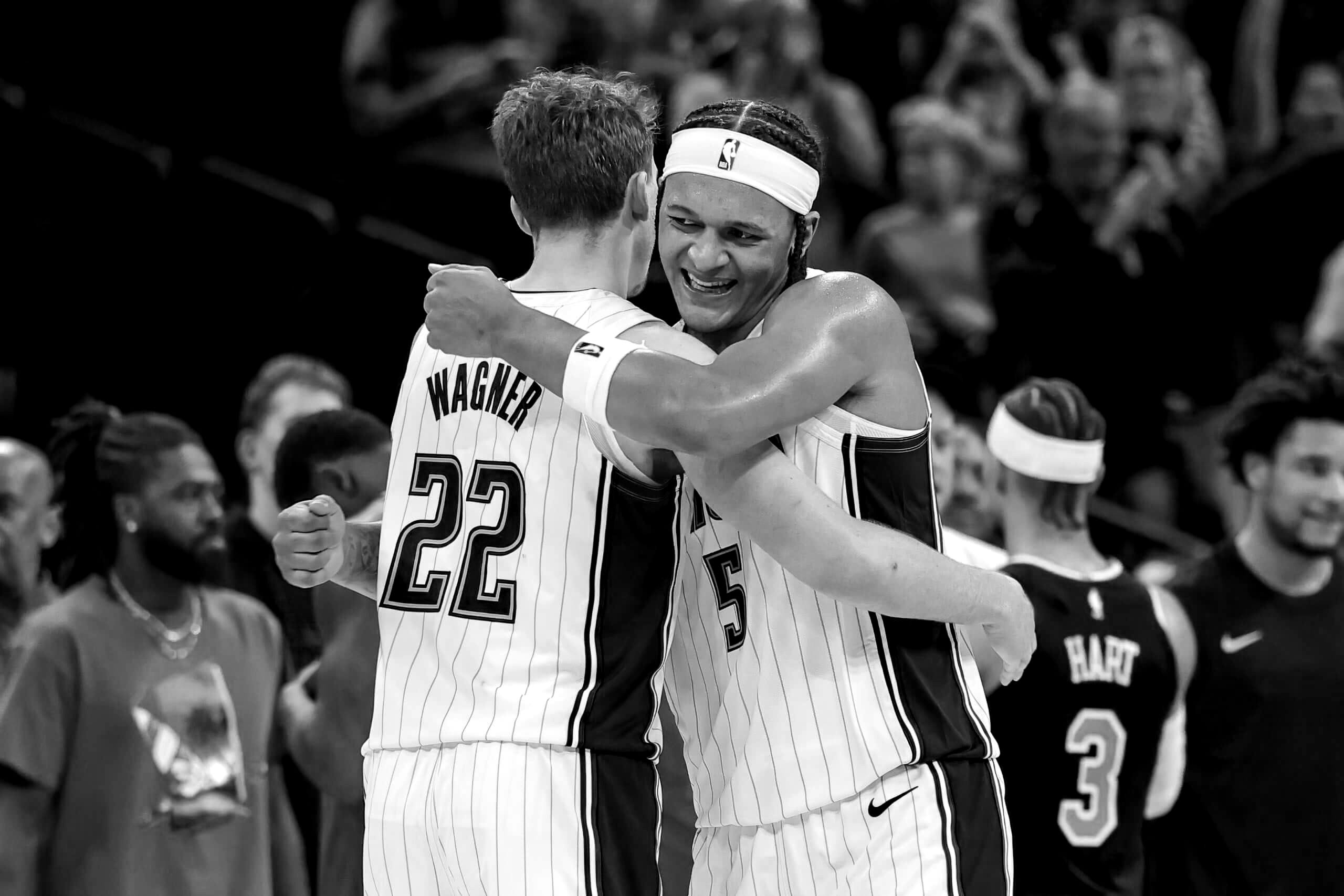
bane is supposed to be the transformational piece, the dynamic shooter who draws two defenders off a pick and creates space banchero has never had. instead, bane is in one of the worst shooting slumps of his career since arriving in orlando. the magic are 14-3 when he scores more than 20 points, which suggests the system works when someone other than banchero is the primary engine. bane averaged 23.4 points on 62.7 percent true shooting in the seven wins during the alternating streak. he averaged 15.9 points on 49.3 percent true shooting in the seven losses. the difference is not subtle.
black is not the answer to orlando’s problems, but he is proof that the system is not broken. he gets to the restricted area 5.4 times per game, sixth among guards. he changes speed mid-drive, decelerating into eurosteps that leave defenders frozen. he spins, pivots, changes hands in mid-air, and finishes with contact. “it’s been over a year since he played in his last game,” tristan da silva said about mo wagner’s return, but he could have been talking about black. “he just brings a certain joy and a certain energy to the game that’s been missed.”
the joy comes from watching someone play free. black does not have the burden of being the number one pick. he does not have four years of on-off data haunting every possession. he does not have a poison pill contract restriction that expires this summer, turning every game into an audition for an extension that could lock orlando into this pattern for another five years. black just plays, and the magic are better for it.
banchero, meanwhile, is shooting 26.5 percent from three, down from 32 percent last season. his shot selection is not improving with age or experience. he still takes forced, erratic, low-probability attempts, isolation plays where he surrenders high ground instead of leveraging the physical advantages that make him unguardable. “i’ve just been trying to pick my spots,” he said, but the spots he picks are often the wrong ones. a pull-up jumper from 18 feet when the lane is open. a contested turnaround from the elbow when bane is spotting up in the corner. these are not the decisions of someone adjusting to a new role. these are the habits of someone who has not changed.
wagner and suggs are out with injuries, waiting to return to a system built around a player who has not proven he can anchor it. wagner is dealing with a high ankle sprain he suffered on december 7. suggs just suffered a grade 1 mcl contusion, his latest in a five-year career defined by injuries. both are crucial to orlando’s success, and both are hoping their returns will stabilize a team that keeps alternating wins and losses like a metronome. but stability requires a foundation that holds, and the magic’s foundation has been tested for four years. the numbers say it does not hold.
the magic have only won five of the 11 games that banchero, wagner, and suggs have played together this season. they outscore opponents by 16.7 points per 100 possessions when those three share the floor, but the sample size is 136 minutes. durability is part of talent, and this group has not shown it can stay healthy long enough to prove anything. black is ascending because franz and suggs are hurt, which means someone loses minutes when they return. that someone will not be banchero.
the historical precedent is not encouraging. lavine, sexton, and hachimura all repeated the same pattern banchero is living through now. talented players on teams that could not figure out how to win with them on the floor. all three eventually had to leave or accept a different role to find success. the magic can tell themselves this is different, that banchero is younger or more talented or one adjustment away from breaking through. but four years is not noise. four years is a signal.
orlando faces a choice this summer when the poison pill restriction lifts. they can extend banchero, commit to him as the franchise centerpiece, and hope year five breaks the pattern. or they can acknowledge what the numbers have been saying since his rookie season and pivot before the club of four becomes the club of five. the decision is not about talent. it is about whether pattern recognition matters more than loyalty.
the magic are 22-18, close enough to the playoffs to feel relevant and far enough from the top to know something is wrong. black is thriving. bane is struggling. banchero is stuck. and the clock is running.