

98
jason collins wore the number for three seasons before the press conference matched what the jersey already said.
the word he paused on was “disappointed.”
steve buckley asked the question on may 12, 2025, one year to the day before collins died. collins had been over the wedding playlist that morning, sorting the reception order with the man he was about to marry. the question came anyway: was he disappointed that more athletes hadn’t come out in the twelve years since he raised his hand?
two beats of silence.
“i would always try to spin things in the way of there’s work to be done,” collins said.
the grammar is the argument. disappointed is past tense. work to be done is future. collins refused the retrospective. he refused the verdict. he redirected the energy before anyone could see where it pointed. this is what thirteen years of carrying something in public looks like when you’ve built a practice out of not letting it pull you under.
jason collins died last week. forty-seven years old. stage four glioblastoma. diagnosed in november, he traveled to singapore for experimental treatment, returned home in time for nba all-star weekend in los angeles. the cancer returned. he died at his los angeles home, surrounded by family, eight months after the diagnosis and fifty weeks after his wedding.
the league sent out statements. the nbpa. the nets. the association. all accurate. none of them the argument.
the argument lives in a number.
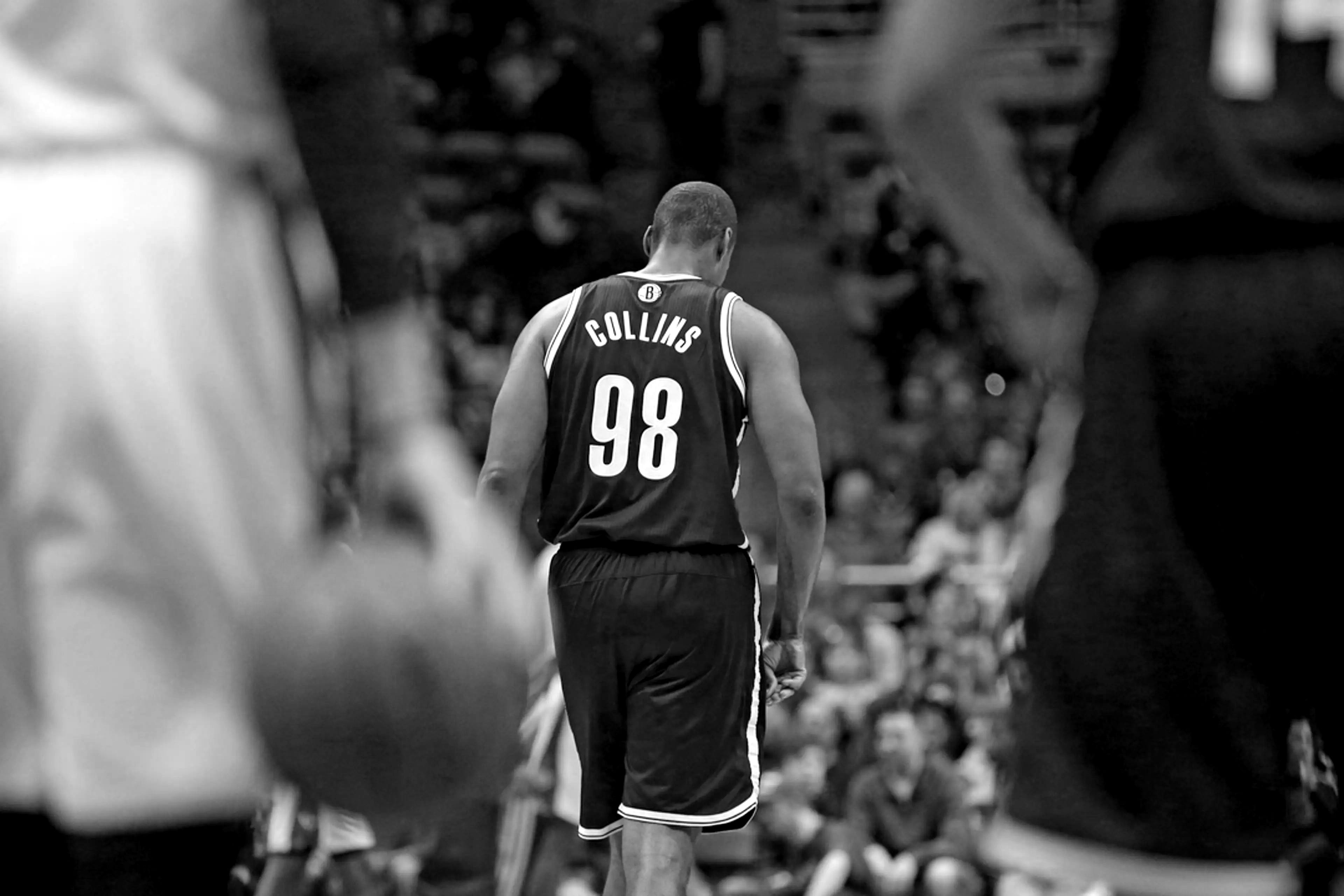
collins chose 98 before anyone outside his circle knew why. three seasons: boston celtics, washington wizards, brooklyn nets. ninety-eight is the year matthew shepard was murdered in laramie, wyoming. twenty-one years old, gay, left tied to a fence in near-freezing temperatures. the death that moved congress to pass the matthew shepard and james byrd jr. hate crimes prevention act eleven years later.
collins chose that number while he was still in the closet.
read that sentence again. he was honoring a man murdered for being gay while not being able to say he was gay himself. the number was the honest thing. every press conference was the other thing. reporters asked about the 98. he gave partial answers, truthful in the way that omission can be truthful. the number got there first. the sentence came twelve months later.
april 29, 2013. sports illustrated. eleven in the morning, eastern time. “i’m a 34-year-old nba center. i’m black. and i’m gay.” not just the first active openly gay player in nba history. the first in any of the four major north american professional sports leagues. collins had spent the weekend making phone calls. the essay was locked, the photo taken, the publication set. at eleven, the sentence finally caught up to the jersey number.
the closet, collins wrote afterward, had been a job. “the energy involved in hiding the stress, shame and fear of being gay is a full-time job.” not a burden. not a weight. a job. unwritten contract, no compensation, no exit clause. for thirteen seasons and 830 career games, the nba extracted from him two performances per day: one on the floor, one in every conversation where someone didn’t ask and he didn’t say.
the houston rockets took him eighteenth in the 2001 draft. the new jersey nets got him via trade and he played his best basketball there, helping the franchise to two nba finals in 2002 and 2003. he averaged 6.4 points and 6.1 rebounds in his best season. he was a rim protector, a screener, a body between the other team’s advantage and his own team’s exposure. the kind of player the broadcast barely mentioned and the rotation couldn’t function without.
twenty-two games. that’s how many he played after coming out, for the brooklyn nets in 2013-14. seven playoff games where he dressed and didn’t get in. those 22 games are the only ones where he was doing one job.
the game-worn jerseys are at the smithsonian now. the number 98 on the back. the number that got there first.
collins was most nervous to tell his grandmother, a deeply religious black southern woman who was the most disciplined person he had ever known. she looked at him and said: “baby, it’s about love.”
that sentence became his operating principle. not comfort. framework. the grandmother’s theology was simpler and more demanding than any league policy. love as the structural argument for why the hand goes up, why the number means what it means, why the closet extracts something the sport never compensates. collins carried that sentence from the family conversation into the press conference into the nba cares ambassadorship into the cancer diagnosis. he faced glioblastoma the way he described facing shaquille o’neal in his prime: no panic, these are the cards, this is the challenge. he traveled to singapore for experimental treatment not available in the united states. he came back in time for all-star weekend. when the cancer returned, there was nothing left to try.
last week, jarron collins accepted the inaugural bill walton global champion award on his twin brother’s behalf at the green sports alliance summit. jason was too ill to attend. “he’s the bravest, strongest man i’ve ever known,” jarron said.
on wednesday night, one day after jason died, charles barkley sat on inside the nba and said the thing collins always declined to say. “we live in a homophobic society, and that’s unfortunate.” kenny smith argued the culture had moved. barkley held his position. barkley was counting the same number collins had refused to call disappointment: thirteen years, zero active nba players out since 2013. not one. carl nassib in the nfl in 2021. a handful across other sports. the trickle that was supposed to become a river.
collins, when asked about that gap, redirected. not denial. grammar. barkley measured it in past tense. collins answered in future: there is work to be done. both were right. the distance between those two verb tenses is where the work still lives.
the grandmother said it was about love. collins believed her. he spent the last thirteen years of his public life building the evidence: the hand raised, the number worn, the essay written, the cancer faced with cards on the table, the award accepted by his brother in the seat he could not fill. all of it testimony. all of it future tense.
jason collins kept his verbs in the future until he ran out of future.
this week's new paid subscribers: james, albert, sonya and peter. some weeks the sermon is heavier than others. thank you for being here. welcome to bang!
98. We all should have been better humans long before that. Some looked at the horror of Matthew Shepard's killing - not death, not murder, but a killing, an evil violent and wholly insane act - and chose to be better. For Jason Collins it was neither a choice, nor necessary: he was already a good man. May we learn from how he lived and how he loved.